

We Loathe Humanity So Much
On curated brokenness and the parts of people we refuse to love

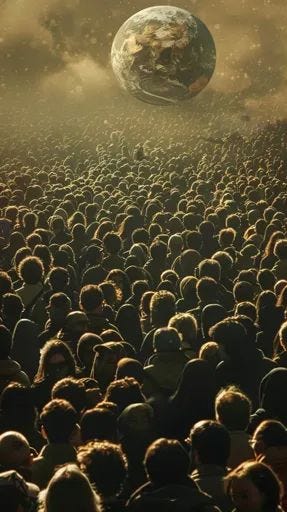
We love humanity in theory. We love the idea of depth, of seeing people in their full complexity, of holding space for damage and dysfunction. We say we want authenticity, we want rawness, we want someone we can “bleed with.”
But what we actually want is the filtered version. The crash-outs we see in movies. The perfect emotional breakdowns with cinematic lighting and a soundtrack that tells us exactly how to feel. We want dysfunction that’s been glamorized, polished, made palatable - though we’d never call it that. We’d say “I relate to this character so much,” and we’d mean it. We relate to the parts that validate our struggle. We downplay the effects of their actions or over-emphasize them depending on where we need to land to keep our worldview intact.
We love the cracks. We just don’t want to see what’s underneath.
The Characters We Can’t Handle
I’ve been watching K-dramas lately - Extraordinary Attorney Woo, Juvenile Justice, Weak Hero Class 1. They stood out to me because they had characters who were completely irrational, deeply annoying, and yet they persisted. They persisted because they were real. Maybe too real.
These were people who hurt others because they were hurt, but they had a choice. Or they hurt others for no reason at all, which is somehow worse because it doesn’t give us a neat narrative to work with.
Attorney Woo and the Discomfort of Actual Disability
Take Attorney Woo. She’s autistic. Her inability to understand social cues affects how she interacts with others. She’s oblivious to her own past, to how people view her, to the way her presence disrupts the comfortable rhythms people have established.
Some characters discriminate against her. Some tear her down. Others pity her, which might be worse. Clients insult her to her face.
But here’s what struck me: her team, the people who initially treated her badly, who got angry at her, who were frustrated by her - they eventually warmed up to her. They began to understand what it was like. And even though subconsciously they still dismissed her sometimes because they couldn’t fully grasp her experience, they tried. They adapted.
We can’t expect perfection. They were once ignorant, but they realized it wasn’t right to treat someone like that, and they should adapt.
That’s the uncomfortable part - the adaptation. The ongoing effort. The fact that understanding doesn’t happen in one revelatory moment with swelling music. It’s clumsy and incomplete and requires you to keep showing up even when you don’t fully get it.
Juvenile Justice and the Truth We Can’t Swallow
Then there’s Juvenile Justice. Two judges with opposing stances - one a victim of the justice system’s neglect, the other someone who benefited from the second chances it offers.
Some of the juvenile offenders in that show were incredibly annoying. Not in a quirky way. Annoying because their actions had consequences that ruined people’s lives, took lives, left scars that would never heal.
Yes, there were contributing factors - neglect, abuse, poverty, all the things we’re supposed to acknowledge. But when interviewed, these children had a clear understanding of what they did. They knew. As to why they did it, they didn’t know, or couldn’t articulate it in a way that made it make sense.
And that forced me to sit with a weird reality: Yes, the kid who was abused actually committed murder. Yes, they assaulted someone. And acknowledging their past doesn’t make what they did more palatable.
Imagine you’re the victim. Will someone narrating how their father beat them as a kid change the fact that now you’re stigmatized and disabled? Will it change the fact that they stabbed you and nearly ended your life? Will it change the fact that your friends pushed you into prostitution because they have wounds from their mothers abandoning them?
And when offered help, when offered a chance at a better life, they sabotage it. They go harder into drugs. They continue doing things that hurt themselves, hoping that the pain will materialize and give them a gauge to finally validate the pain they felt.
When people actually tried to care, they pushed them away.
Which sounds stupid, right? Except we do it too.
Someone points out that we’re getting snappy, that we’re becoming too indulgent in our worst habits. And we shun it. We say “I already know.” You know, but you aren’t doing anything about it.
Beom-seok and the Dysfunction We Romanticize
Then there’s Beom-seok from Weak Hero Class 1.
Beom-seok represents the well-to-do, nerdy, introverted kid who got bullied and abused at home by his father. He becomes friends with Si-eun and Su-ho, but Su-ho represents something that Beom-seok both admires and fears. To make it worse, he lacks communication skills.
All of it could have been avoided if he’d spoken up about feeling left out. But no - he swallowed it and started doing really terrible things. He nearly got Su-ho killed. Put him in a coma.
The reactions to his character were divided in a way that revealed everything about how we consume dysfunction:
Some people loved him. Said they were related to him. He represented them when they struggled with friendships. They completely downplayed the impact of his actions.
Others hated him. Said he had a chance, he had good friends, but was unwilling to change. Which is true - but that’s also due to his dysfunctional environment, his lack of tools, his inability to see outside his own pain.
We glamorize the parts that suit us. Our parental wounds. Our abandonment by friends. We pick and choose which pieces of the broken person we want to see, and we discard the rest.
The Gap Between Fiction and Reality
Here’s what I’ve realized: we both overestimate and underestimate the impact of our actions, depending on which serves us better in the moment.
In films, when two best friends have a falling out because one is going through loss or heartbreak and doesn’t know how to handle it, they ghost, they act weird, they lash out. And we think, “Oh, it’s because she’s hurt.” We extend grace because the narrative has told us to.
But in real life, if you were on the receiving end of that, it’s just hurtful. There’s no narrator explaining the context. There’s just silence, or cruelty, or distance that feels like rejection.
Every now and then, there’s a trend about something that was once frowned upon. “POV: you’re so clumsy you could trip on air.” “Forever a yappaholic.” We make it cute, we make it quirky, we give ourselves permission to occupy space in ways that might actually be frustrating to the people around us.
In real life, if someone were that clumsy, it could be exhausting. If someone talks too much, they’re usually told to shut up, that they’re too much.
In films, we see characters who speak up against wrongs and we call them brave. In real life, they’re told to accept the world as it is, to stop being naive, that they’re doing too much.
People cry over and over for the same reasons in films, and we label it as depth, as complexity. In real life, we say, “Move on already.”
We say we want someone we can bleed with. But do you realize that to bleed, you have to be cut? And it’s messy. Not perfect. Not aesthetic. It stains things.
I’m saying all this to point at something we’re all doing: curating our dysfunction. Curating our insecurity, our irrationality. Using our past as an excuse for certain behaviors and making it someone else’s problem.
We like to extend this grace to ourselves, but can rarely reciprocate it. We like to be the weird one until it requires dealing with someone else’s weirdness. We want to be understood in our damage until someone else’s damage requires our patience.
We loathe humanity so much. Not the idea of it - we love that. We love the concept of depth and complexity, and embracing the full spectrum of human experience.
What we loathe is the actual texture of it. The inconvenience. The way it demands things from us. The way it refuses to perform on cue or resolve itself in ninety minutes.
We love to peek into the cracks, but we don’t want to peel back the mask. We don’t want to do the uncomfortable work of sitting with someone else’s dysfunction when it doesn’t validate our own. We don’t want to adapt, to keep showing up, to hold space for the parts of people that aren’t lovable or relatable or easily digestible.
A Small Hope
I say all this, and I include myself in it. I’ve caught myself doing this - loving characters who reflect my wounds while dismissing real people whose wounds inconvenience me. Wanting grace for my dysfunction while getting impatient with others.
But I also see hope. People seem to be putting more effort nowadays into being better. Into recognizing the gap between the humanity we claim to value and the humanity we’re actually willing to sit with.
This is fantastic! What an apt essay on humanity itself. You've really shown quite a mirror, Unknown. I'm blown away.